Can I Divorce for Infidelity?
The Stoic Answer
The moment you found out, something shifted. Not just in your relationship — in you. And now you're standing in the rubble of trust, asking a question that carries the weight of your whole life: Can I leave? Should I?
This question lives in millions of people who never expected to ask it. Infidelity doesn't just break a promise. It breaks your sense of what was real. It leaves you caught between grief and anger, between love and betrayal, between who you thought you were and who you now have to decide to be. That's why this question matters so deeply. It's not really about paperwork or legality. It's about whether you still get to choose your own life.
The Sage — a guide rooted in the ancient Stoic tradition — begins with a striking image. Cato, a Roman general and philosopher, burned his own ships so that no one could retreat on his behalf. He didn't let circumstance decide for him. He made a clean, deliberate choice. Then he sat down and read Plato. The point isn't drama. The point is clarity. Even in the worst moment, even when everything is falling apart, the power of decision still belongs to you. The Stoics believed that what happens to us and what we decide about it are two completely different things. One is out of our hands. The other never leaves them.
The Stoic philosopher Epictetus called this the "discipline of assent" — a phrase that simply means the pause between what happens and how you respond to it. The infidelity is a fact. It happened. You cannot change that. But what it means for your future — whether it signals the end, whether it opens a conversation, whether it calls for forgiveness or departure — that is your judgment to make. No one else can make it for you. Not your family. Not your faith. Not fear. The Sage is careful to say: divorce is not failure. What would be a failure is staying only because you're afraid to leave, or leaving only because you're afraid to stay. The decision must come from you — from that quiet, honest place inside you that knows the difference between love and habit, between hope and denial.
Here is the most powerful idea this guide offers: The gap between what happened and what you decide it means — that gap is yours. No one can take it from you. That tiny space of reflection, however painful, is where your freedom lives.
Imagine a woman named Claire. She sits at the kitchen table at midnight, a cup of tea gone cold beside her. She's been going over the same moment in her mind for weeks — the text she wasn't supposed to see. She keeps waiting for someone to tell her what to do. Her mother says stay. Her friend says leave. Her heart says both, and neither. Then she reads something about the Stoics — about that pause, that gap. And for the first time, she stops asking what should I do and starts asking what do I actually believe? That shift doesn't solve everything. But it gives her back something she thought she'd lost: herself.
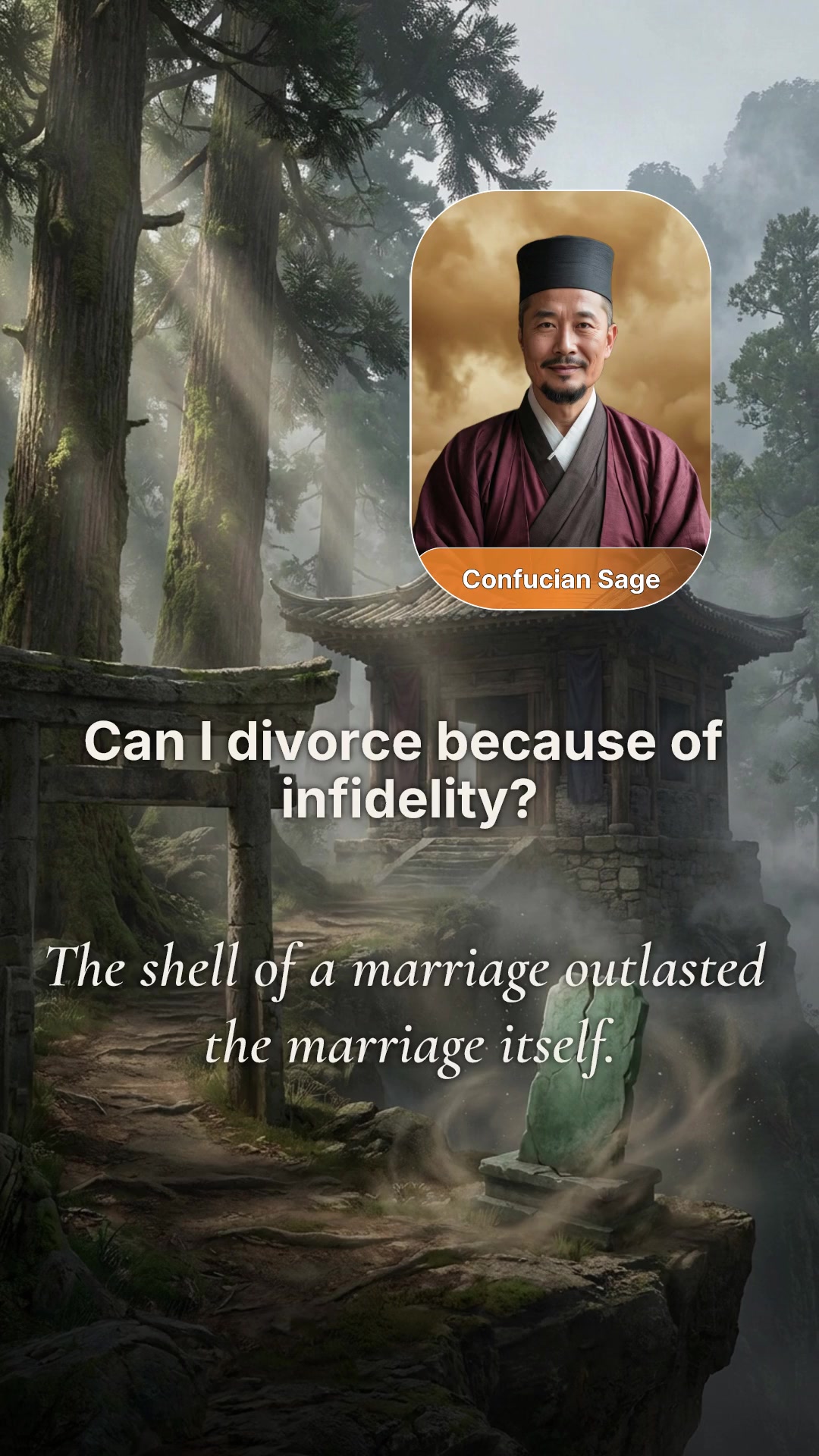
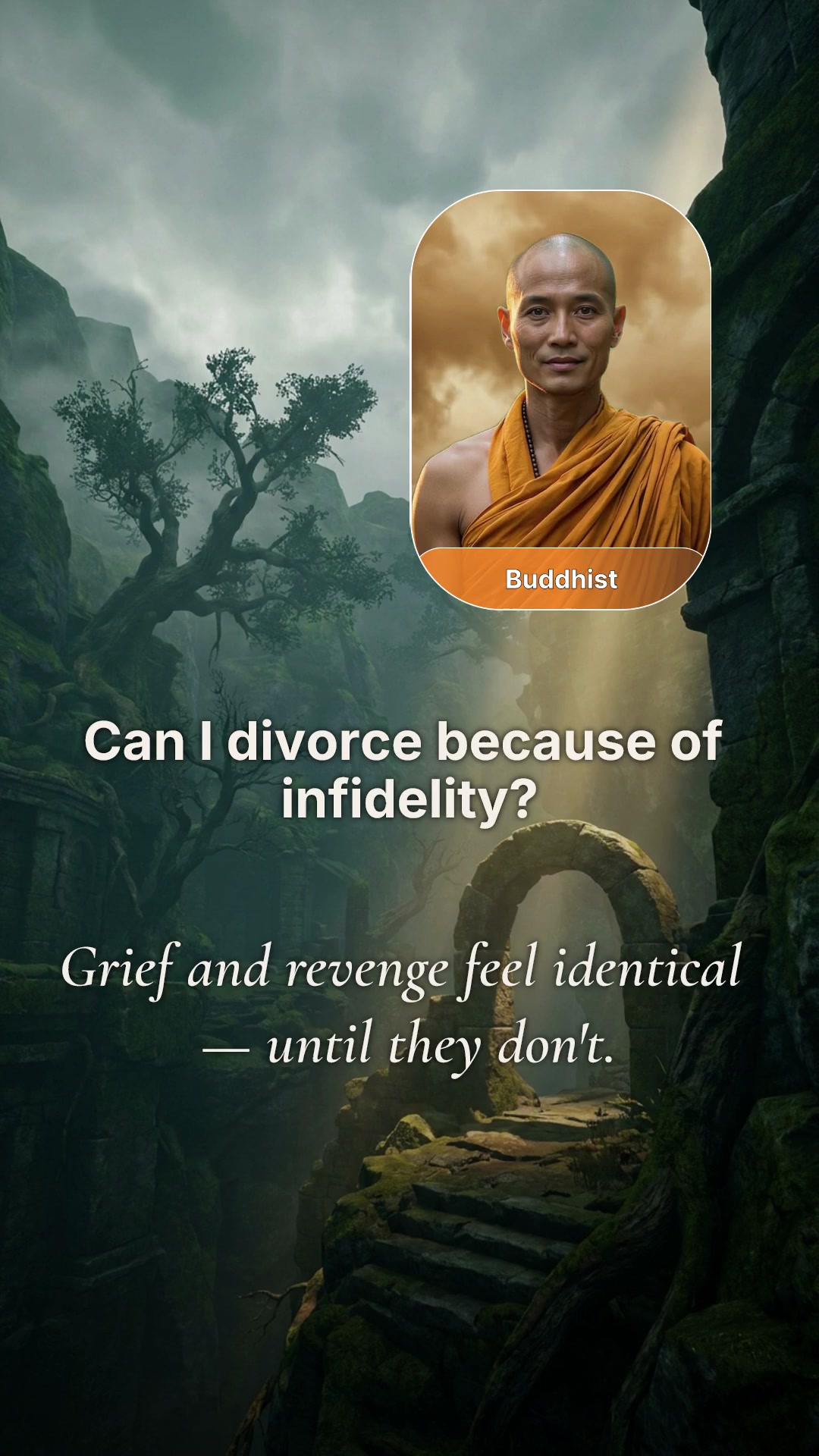
Other wisdom guides would approach this moment differently. A Rabbi might explore what sacred covenant asks of both partners — and what it permits when that covenant is broken. A Buddhist Sage might speak about attachment and the suffering that comes from clinging to what was. A Native Elder might ask what the community, the family, the larger circle needs to heal. A Catholic guide might weigh forgiveness and permanence with great care.
One question. Nine different paths.
Compare all nine answers and see which one speaks to you most.
One question. Nine perspectives
See how different AI guides answer the same question: “Can I divorce because of infidelity?”
Fresh reflections, thoughtful answers, and video insights from our guides — for moments when you need clarity, comfort, or perspective.