Why Bad Things Happen to Good People: The Second Arrow
Some pain doesn't make sense. You did everything right. You were kind, careful, honest — and still, something broke. Still, the loss came. Still, the illness arrived, the betrayal landed, the grief moved in and refused to leave.
That feeling — why me? — is one of the oldest questions a human being can carry. It doesn't come from self-pity. It comes from somewhere much deeper. It comes from the belief that life should be fair, that goodness should protect us, that the universe keeps some kind of score.
Most of us grow up with an invisible contract in our hearts. Be good, and good things will follow. Work hard, love well, hurt no one — and you'll be spared. When that contract breaks, we don't just feel pain. We feel confused. Betrayed. Sometimes we feel guilty, as if we must have done something to deserve it. That confusion is what makes suffering so much harder to carry.
The Buddhist Sage offers a different way of looking at this — not to dismiss the pain, but to look at what we add to it. There's a teaching in Buddhist thought sometimes called the second arrow. The first arrow is the thing that actually happens: the loss, the sickness, the heartbreak. That arrow lands. It hurts. No one is arguing otherwise. But almost immediately, the mind reaches for a second arrow and fires it inward. This shouldn't be happening. I don't deserve this. Something is wrong with the universe. That second arrow — the story we build around the pain — can hurt even more than the first.
The story of Milarepa, one of Tibet's most beloved spiritual teachers, points directly at this. He lived for years in a mountain cave, eating almost nothing, meditating through cold and hunger until his skin turned green. His students once asked him why practice had to be so difficult. He didn't explain. He picked up a stone, held it quietly, and then set it down. And then he sang. Not because the hardship had ended. But because he had stopped asking whether it was deserved. He had stopped dividing experience into fair and unfair. That division, the Buddhist Sage suggests, is not wisdom — it is a wound we keep reopening.
This doesn't mean we shouldn't grieve. It doesn't mean pain is an illusion. It means that the suffering we add through judgment — through the relentless question of why me — is something we actually have the power to put down, the way Milarepa set down the stone.
Here is the heart of it: the pain may not be yours to prevent, but the story you tell about the pain is yours to examine. Before the word bad arrived, before the mind rushed in with its verdict — there was just a feeling in your chest. Raw, real, and unnamed. The Buddhist Sage asks you to sit with that feeling, just for a moment, before the judgment begins.
Imagine someone who just received difficult news. She sits alone in her car, unable to go inside yet. Her mind is already building the case — why now, why me, what did I do wrong. But for a few seconds, before all of that, there is just the weight of it. Quiet and honest. The Buddhist Sage would say: stay there a little longer. That honesty, without the verdict, is where something like peace can begin.
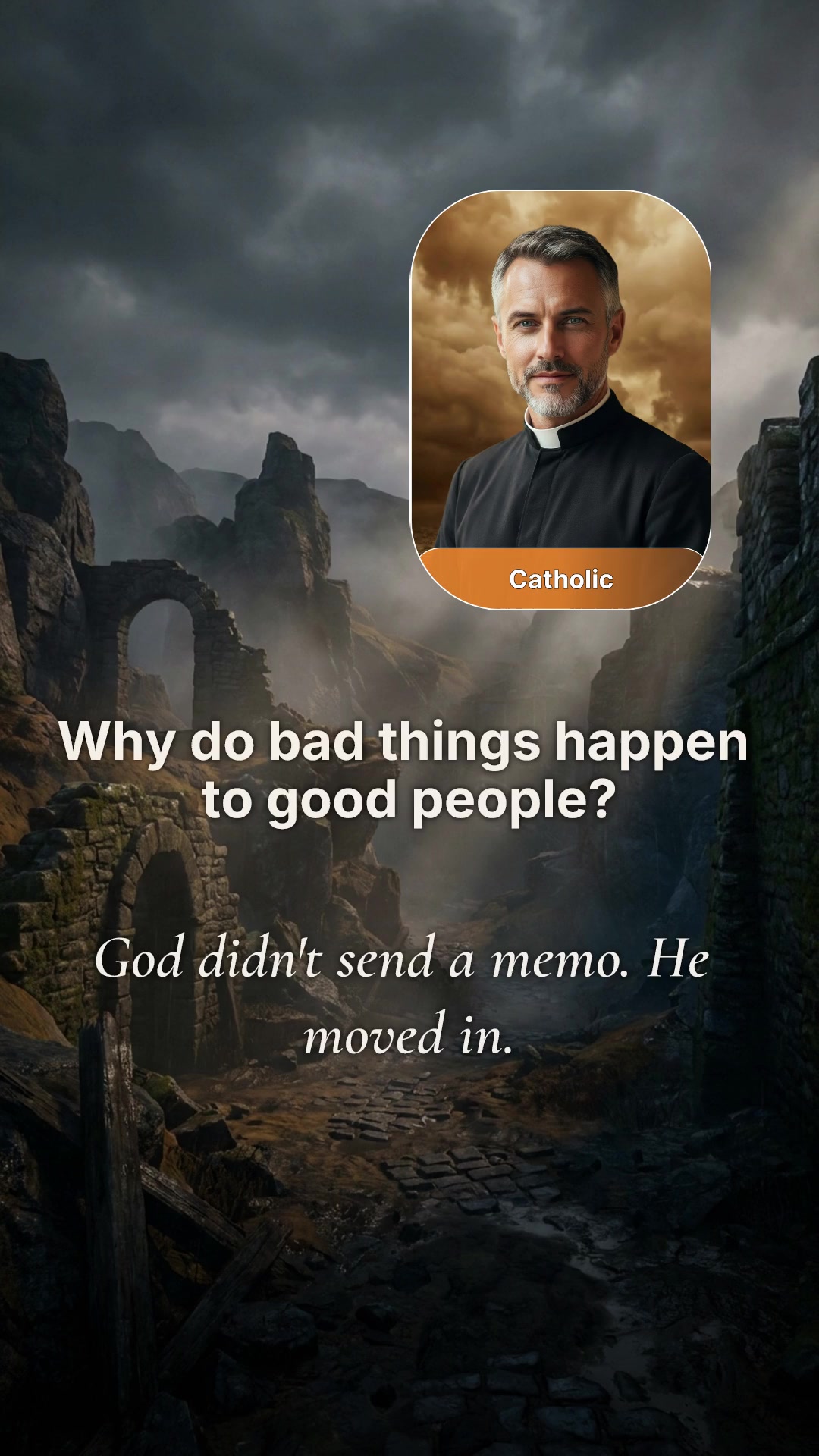
Other guides would walk a different path with this same question. A Rabbi might speak about wrestling with God through the darkness. A Catholic might find meaning in suffering shared with something sacred. A Native Elder might look to the cycles of the earth for answers. A Daoist Sage might ask whether resistance itself is the source of the pain.
One question. Nine different paths.
Compare all nine answers and see which one speaks to you most.
One question. Nine perspectives
See how different AI guides answer the same question: “Why do bad things happen to good people?”
Fresh reflections, thoughtful answers, and video insights from our guides — for moments when you need clarity, comfort, or perspective.